Guide · Buying
Canon EOS R6 vs R6 Mark II, Used
What changes between a used Canon EOS R6 and an R6 Mark II, and which differences show up after you have already paid for the body.
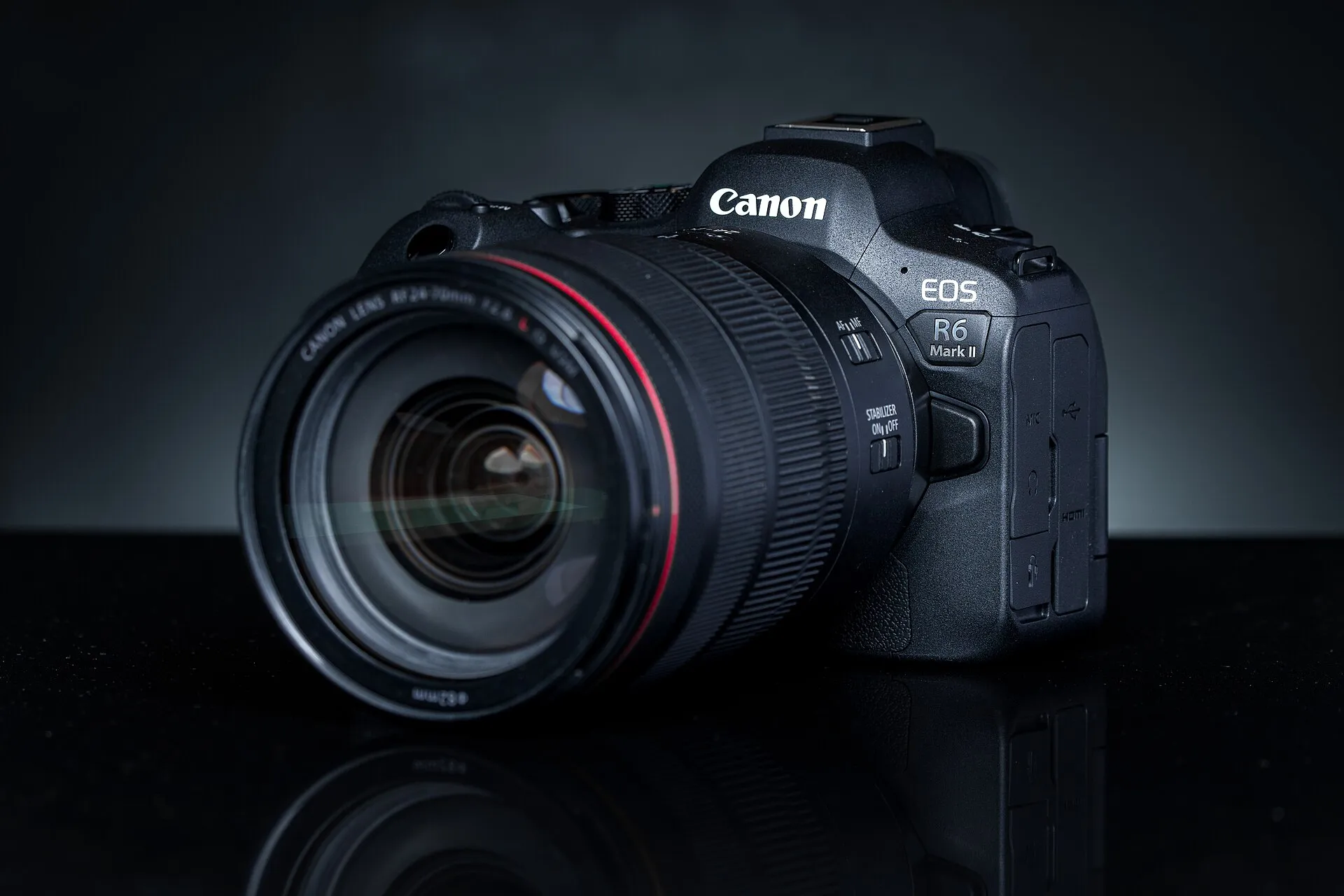
Photo: Henry Söderlund · CC BY 2.0

The Canon EOS R6 and the R6 Mark II get shortened to the same three characters in a listing title. That is how people overpay. The cameras share a mount, a battery family, a flip screen, and the job of being the fast Canon full-frame body that is not an R5. They do not share a sensor, and they do not share a 4K 60p implementation. If you are shopping used, those two facts are the purchase.
This is not a price. Both product pages say when a measured asking range exists and stay blank when it does not. The gap between the two bodies moves. Read the listings in front of you, then use this page to decide whether the gap is buying a different camera or buying the same one with a newer badge.
What stayed the same
Both are RF-mount full-frame bodies. EF lenses work through an EF-EOS R adapter with no extra glass, which is why a bag of EF zooms still points people at these cameras instead of a Sony. Both have in-body stabilization, a vari-angle screen, and dual SD slots. Both take the LP-E6NH. If your current camera is an EF DSLR and the lenses are the point, either body lets you keep them.
Handling is familiar if you have used one of them. The grip, the joystick, and the lack of a top display are the same conversation. People who wanted a top LCD did not get one by waiting for the Mark II. People who wanted the flip screen already had it on the original R6.
The sensor is the quiet difference
The original R6 is a 20.1-megapixel camera. The Mark II is 24.2. That is not a medium-format leap. It is the difference between a file you can crop a little and a file you can crop a little more. For a portrait delivered online, you will not see it. For a tight crop of a face in a group, or a print that you intend to stand close to, you will.
Twenty megapixels was the complaint that followed the R6 out of every review thread. Owners who loved the autofocus still said the files ran out when they treated the camera like a longer lens. The Mark II answers that complaint without becoming the R5’s 45-megapixel body. If you already know you crop hard, the Mark II is the R6 you were waiting for. If you do not crop, you are paying for a number you will not use.
Video is the loud difference
The original R6 records 4K 60p from a crop, and early bodies became famous for getting hot. Later firmware extended recording, which is why a used R6 with current firmware is not the camera people complained about in 2020. Test it anyway. A seller’s “it does 4K” is not a twenty-minute clip in a warm room.
The Mark II records 4K up to 60p from the full width of the sensor, oversampled from 6K, which is Canon’s own description at launch. That is the reason a hybrid shooter moves. It is also still a body that can get warm. “No more crop” is not “no more heat.” Put a full battery in it and record something longer than a test pattern before you decide the problem was solved for your work.
If you shoot a few clips a year, neither camera’s video spec should decide the purchase. If the camera is also the video camera, the Mark II is the one that does not make you choose between 60p and the wide end of your zoom.
Speed, and what the number hides
The Mark II’s electronic shutter is rated up to 40 frames per second, and the mechanical shutter up to 12. The original R6 was already a fast camera, with 12 fps mechanical and 20 fps electronic. For a wedding or a football game, both keep up. The 40 fps mode is a special tool. It also fills a card and can make a shutter-count conversation meaningless, because a minute of electronic bursts is a lot of frames and not a lot of mechanical wear.
Ask how the camera was used. A bird photographer’s Mark II can show a startling frame count and a clean body. A studio camera can show a low count and a worn mount from being put on and taken off a tripod every day. The number is one fact. The mount screws, the card doors, and the rubber on the viewfinder are the others. The shutter-count guide is the procedure. Use it on both bodies. Canon does not print the count in a normal photo’s EXIF the way Nikon does.
Autofocus
Both cameras are why people left DSLRs. Eye detection on the R6 was the feature owners would not give back. The Mark II adds more subject types, including vehicles, and it is the more recent set of habits. For a person walking toward the camera, either body gets the eye. For a subject that changes shape against a messy background, the newer body fails less often. That is a real difference and a small one next to the lens in front of the camera.
Do not buy a Mark II to fix a lens. A used RF 50mm f/1.8 or an adapted EF 70-200 changes the pictures more than the generation of the body. If the lens plan is “the kit that came with it,” you are shopping a kit, not this comparison.
How to read the listings
Separate the two cameras before you compare prices.
- The original R6 does not say Mark II. If the photos are a stock render, ask for the badge on the front of the actual camera.
- The Mark II is 24 megapixels in the menu. The original is 20. A seller who cannot show the menu is hoping you will not ask.
- “Low shutter” is not a number. Ask for a reading from software that names the model, and write down what you were shown.
- Kits are a different product. A body price and a body-plus-RF-24-105 price should not be averaged in your head.
- Battery and charger matter. The LP-E6NH is the pack. A third-party battery of unknown age is not a complete camera.
Then look at the two product pages. If a measured asking range is there, that is the spread of asking prices, not a sold price. If the page still says the price data is coming, you are in the same position as everyone else: reading the listings one by one.
Which one to buy used
Buy the original R6 when the price gap is wide and your work is stills of people, with the occasional video clip at 30p. Twenty megapixels will not hurt you if you frame in camera. The autofocus and the stabilization are already the camera you wanted in 2020, and a used example with fresh firmware is a calmer video camera than its launch reviews described.
Buy the Mark II when you crop, when you record 4K 60p without giving up the wide end of the lens, or when the two bodies are close enough in asking price that the newer sensor is the cheaper mistake. Do not buy it because a listing says “latest R6.” There is always a later one, and the badge is the entire difference between these two pages.
If you are also cross-shopping Sony, the A7 III and the A7 IV are the parallel argument: an older 24-megapixel body against a newer, more capable one, on a different mount. The mount decides the lens budget. A cheaper Canon body that strands a bag of Sony lenses is not cheaper.