Guide · Inspection
How to Check a Used Lens Before You Buy
How to read a used-lens listing and what to test in person: fungus, haze, the aperture, autofocus, stabilization, and the model names sellers mix up.
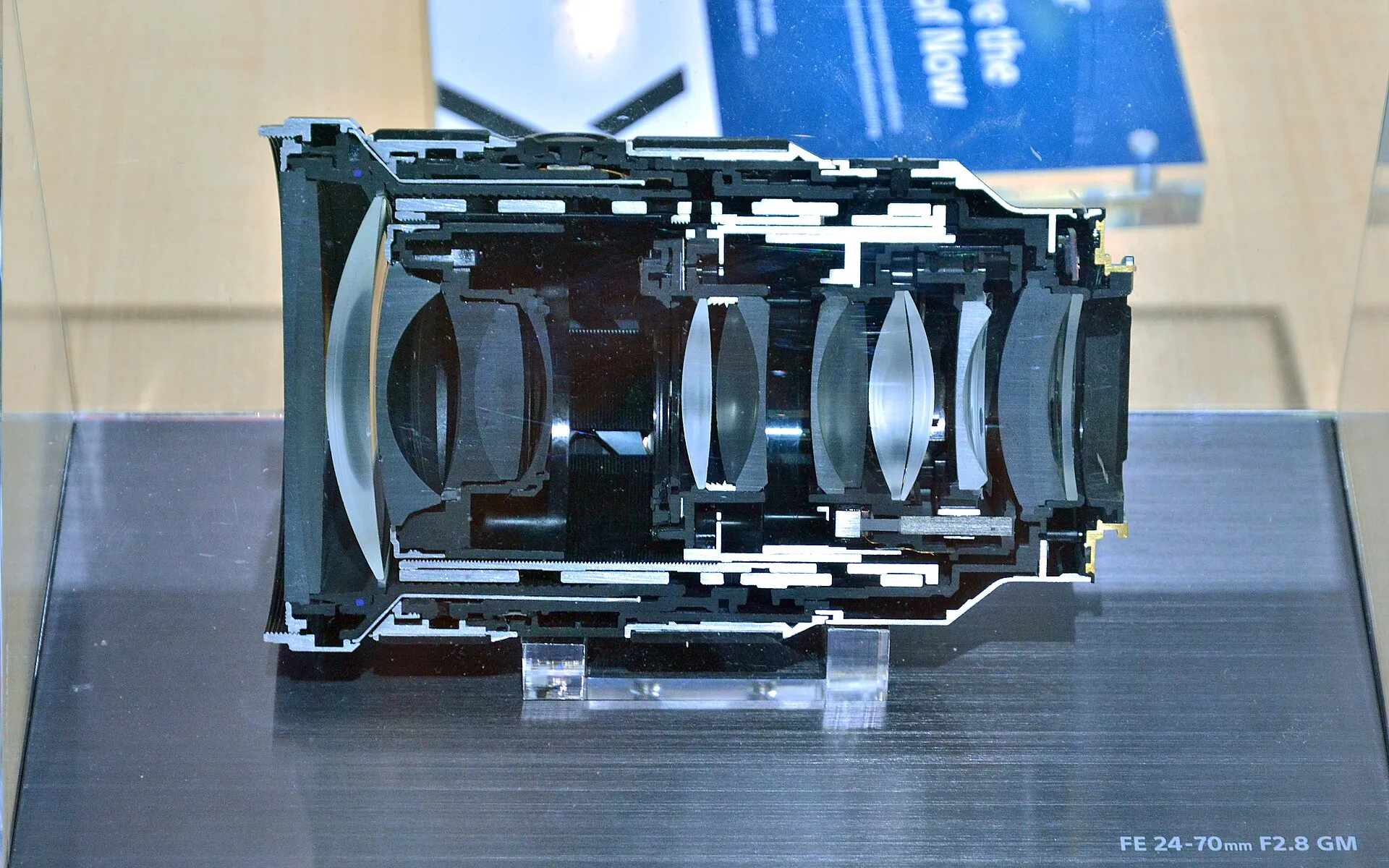
A used lens is a tube of glass with a history the listing will not volunteer. The barrel can look tidy while the inside is hazy. The autofocus can hunt. The stabilizer can be dead. None of that shows up in a shutter count, because a shutter count belongs to the body. This is the inspection, in the order that saves money, for the lenses already written up in this guide.
Pair it with the eBay buying guide if the purchase is a listing rather than a counter at a shop. The count, if you are also buying a body, is a separate job: how to check shutter count.
Start with the exact model
Sellers shorten names until two lenses become one. The Sony FE 24-70mm f/2.8 GM is not the GM II. The FE 70-200mm f/4 G OSS is not the f/2.8 GM and not the later f/4 G II. The Canon EF 70-200mm f/2.8L IS II is not the IS III. The RF 24-105mm f/4L is not the slower f/4-7.1 STM. On Fujifilm, the XF 23mm f/1.4 R and the XF 56mm f/1.2 R are the older generations, not the later weather-sealed redesigns. The Nikon Z 24-70mm f/4 S is not the f/2.8 S, and the Z 24-120mm f/4 S does not say VR.
If the title and the photos disagree, believe the engraving on the barrel and ask the seller to restate the model in a message. The message is part of the record.
What the glass is allowed to have
Dust happens. A few specks on the front element, or a little dust inside a zoom that has lived in a bag, rarely print. You can see them if you shine a light from the side and look through the lens. You usually cannot see them in a photograph of a normal scene.
Haze is different. It looks like a fog on or between the elements, and it lowers contrast. Fungus looks like fine threads or a web, often starting at the edge of an element. Separation looks like a rainbow or a crackle where cemented elements have let go. Those three are the reasons to walk away, or to pay a repair price rather than a clean-lens price. A title that says “no fungus” is a claim. A side-lit photo of the front and the rear element is the evidence.
Do not clean a lens you have not bought yet, and do not let a seller “buff it” on camera. Coatings scratch. If you already own it, a blower and a clean cloth are enough until you know what you are looking at.
The photos worth asking for
You need photographs of this copy, not a manufacturer picture and not the same three angles the seller uses for every lens.
- The engraved name on the barrel, in focus, so the generation is not a guess.
- The front element and the rear element, with a lamp or a window to the side, so haze and fungus show up.
- The filter thread and the mount flange. A dented thread will not take a filter. A dented mount will not sit square on the camera.
- The switches: autofocus, stabilizer, and any focus limiter. Photograph them in both positions if you can.
- A frame shot on a camera at a wide aperture, of something with fine detail, so you can see whether one side of the picture is soft.
A seller who will not take five more pictures is telling you the inspection stops at the listing.
What to do with the lens in your hands
If you can try it before you pay, or inside a return window, the tests are short.
Mount it. Autofocus should be quiet and should land, near and far, more than once. A grind, a buzz that does not stop, or a lens that hunts and gives up is a repair. Manual focus, where the lens has a real ring, should feel even. A ring that is loose at one end and stiff at the other has a tired helicoid.
Open and close the aperture if you can see the blades, or shoot a sequence from wide open to a small aperture. Blades that are oily look wet. Blades that stick will give you a picture that is the wrong brightness. This is common on older lenses and not a thing a title will mention.
Zoom through the whole range. It should not grind, and it should not leave a gap you can see between the barrel sections. A collapsing zoom, such as the Nikon Z 24-70mm f/4 S, should lock. If it will not lock, or if it unlocks in the bag, the mechanism is tired.
Stabilized lenses need one extra check. Turn stabilization on, half-press, and look through the finder or at the live image. You should see the view settle. A rattle when you tip the lens, with the camera off, can be normal on some designs and a broken group on others. The test that matters is whether the stabilizer engages. On the Canon EF 70-200mm f/2.8L IS II and the RF 24-105mm f/4L, a dead stabilizer is the expensive surprise. The Sony FE 70-200mm f/4 G OSS has its own switch. The Nikon Z zooms in this guide do not: the body does that work, so a listing that advertises “VR” on a Z 24-120mm f/4 S is describing a different lens.
Mounts and adapters
A lens is only a bargain on the camera you will actually use. An EF lens on an RF body needs an adapter. A Nikon F lens on a Z body needs the FTZ. Neither adapter adds reach or sharpness, and a cheap adapter can be loose. If you do not already own the mount, price the adapter and one native lens before you decide the used glass was the saving.
The lens finder only suggests lenses that are already in this guide, for the mount you name. It will not invent a model, and it will not pretend an original retail price is today’s used ask.
Kits, hoods, and the parts that go missing
A lens sold “as a kit” with a body is a different product from the lens alone. The body page in this guide, when it has a price, is for the body. Do not average a kit listing into a lens price in your head.
Hoods, caps, and tripod collars disappear. A missing hood is an annoyance. A missing tripod collar on a 70-200mm is part of the lens you thought you were buying. Ask. The rear cap matters more than the front cap, because the mount and the rear element are what sit in the bag against everything else.
Where to look
These searches are for the exact models in this guide, limited to used condition on eBay. They are asking prices on someone else’s site, not a measured range from this one, and not a sold price.
As an eBay Partner, we may earn a commission from qualifying purchases. Read the disclosure.
If a product page on this site still says the price data is coming, that blank is intentional. Use the listing in front of you, and use the checks above, until a measured range exists.
Questions
Does a few specks of dust mean I should skip the lens?
No. Dust on the front element or inside a zoom is common and usually does not show in photographs. Haze across the glass, fungus that looks like threads, or balsam separation are different problems. Ask for a photo of the glass with a light beside it, not a beauty shot of the barrel.
Can a shutter count tell me the lens is fine?
No. A shutter count belongs to the body. A lens can be tired, oily, or hazy on a camera with a low count, and a high count does not mean the glass was abused. Check the lens on its own.
What if the listing is a newer version of the same lens?
Read the full name. A Sony FE 24-70mm f/2.8 GM is not the GM II. A Canon EF 70-200mm f/2.8L IS II is not the IS III. A Fujifilm XF 23mm f/1.4 R is not the later R LM WR. The characters after the focal length are the purchase.
Should I trust a “no fungus” line in the title?
Treat it as a claim, then look. Ask for a photo of the front and rear elements with a lamp to the side. If the seller will not take it, assume you cannot inspect the thing you are about to pay for.